Gathering noteSCIRE2026
映像の教室 #1 絵コンテを描こう
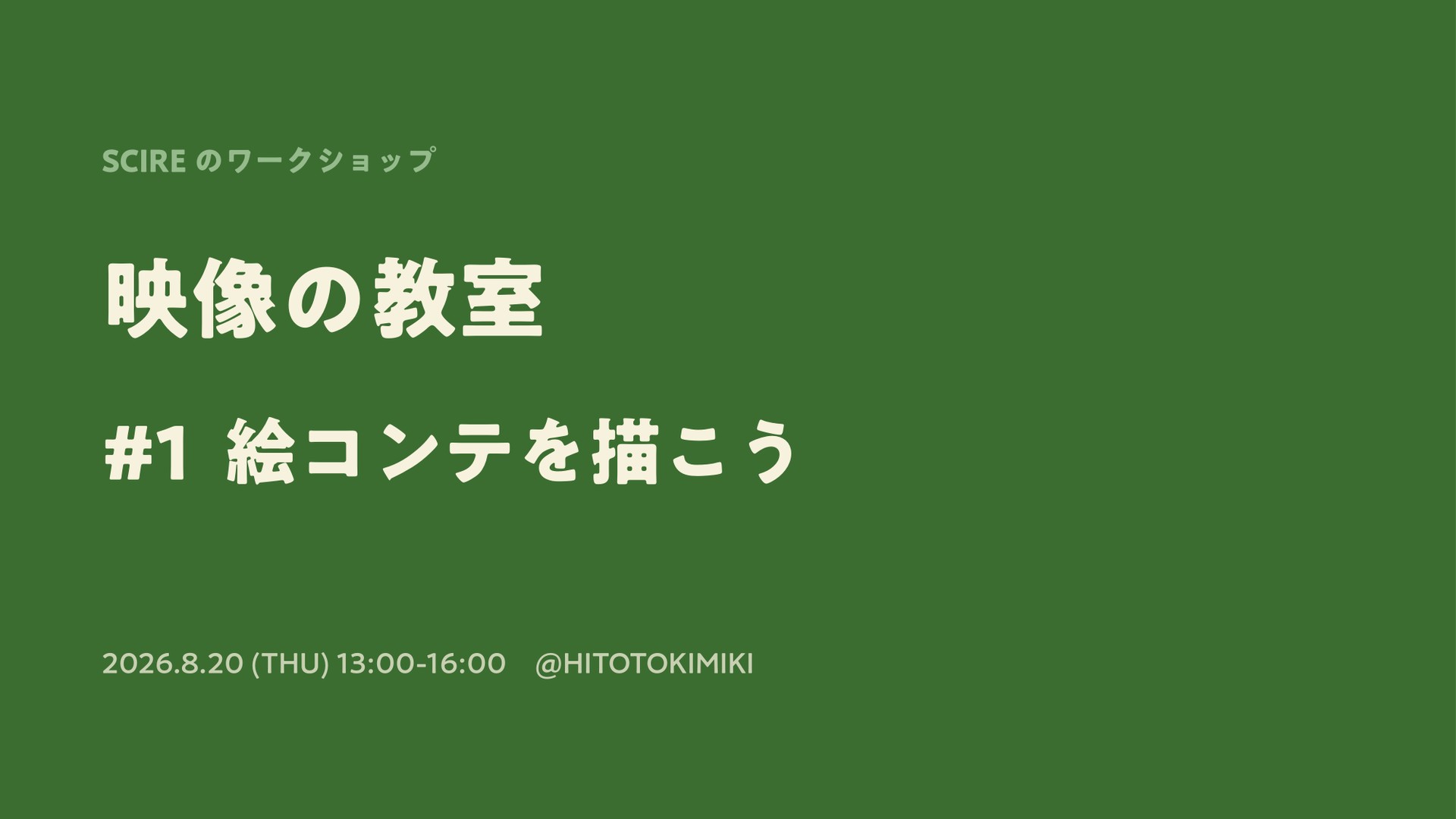
2026年8月20日、HITOTOKI MIKI で、SCIRE のワークショップの新しいシリーズ「映像の教室」をはじめました。第1回のテーマは「絵コンテを描こう」。中学生と高校生を対象に、3時間かけて、映像の歴史をたどりながら、自分だけの映像を絵コンテにしてみる回です。
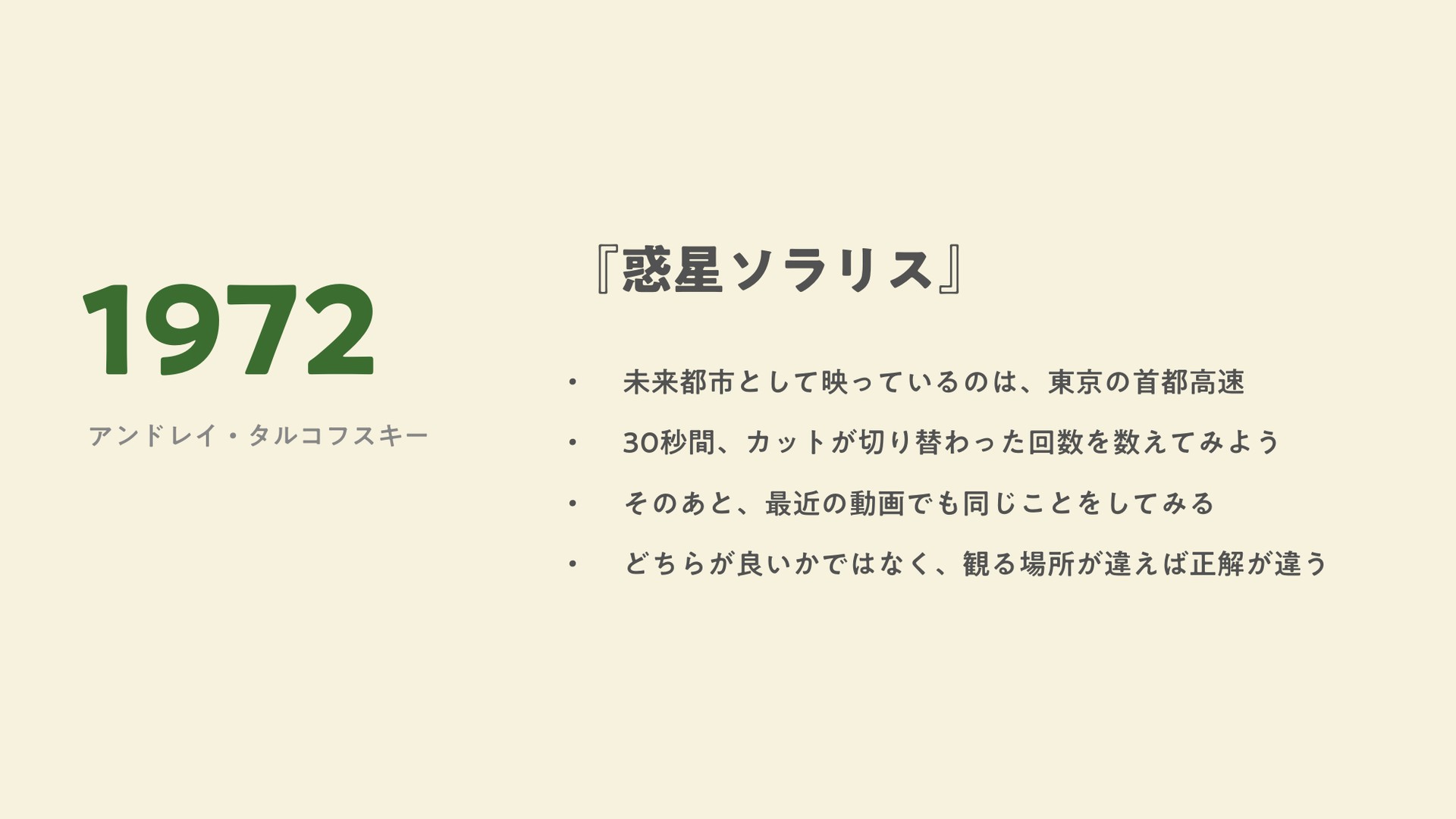
入口にしたのは、「いま流行するスマートフォン動画は、どこからうまれてきたのだろう?」という問いです。事前のアンケートで、ふだんどんな動画を、どこで見ているかを聞き、その結果から話をはじめました。まずはタルコフスキーの『惑星ソラリス』を少しだけ観て、30秒の間にカットが何回切り替わるかを数え、最近の動画でも同じことをしてみます。どちらが良いかではなく、観る場所が違えば正解も違う、ということを確かめました。
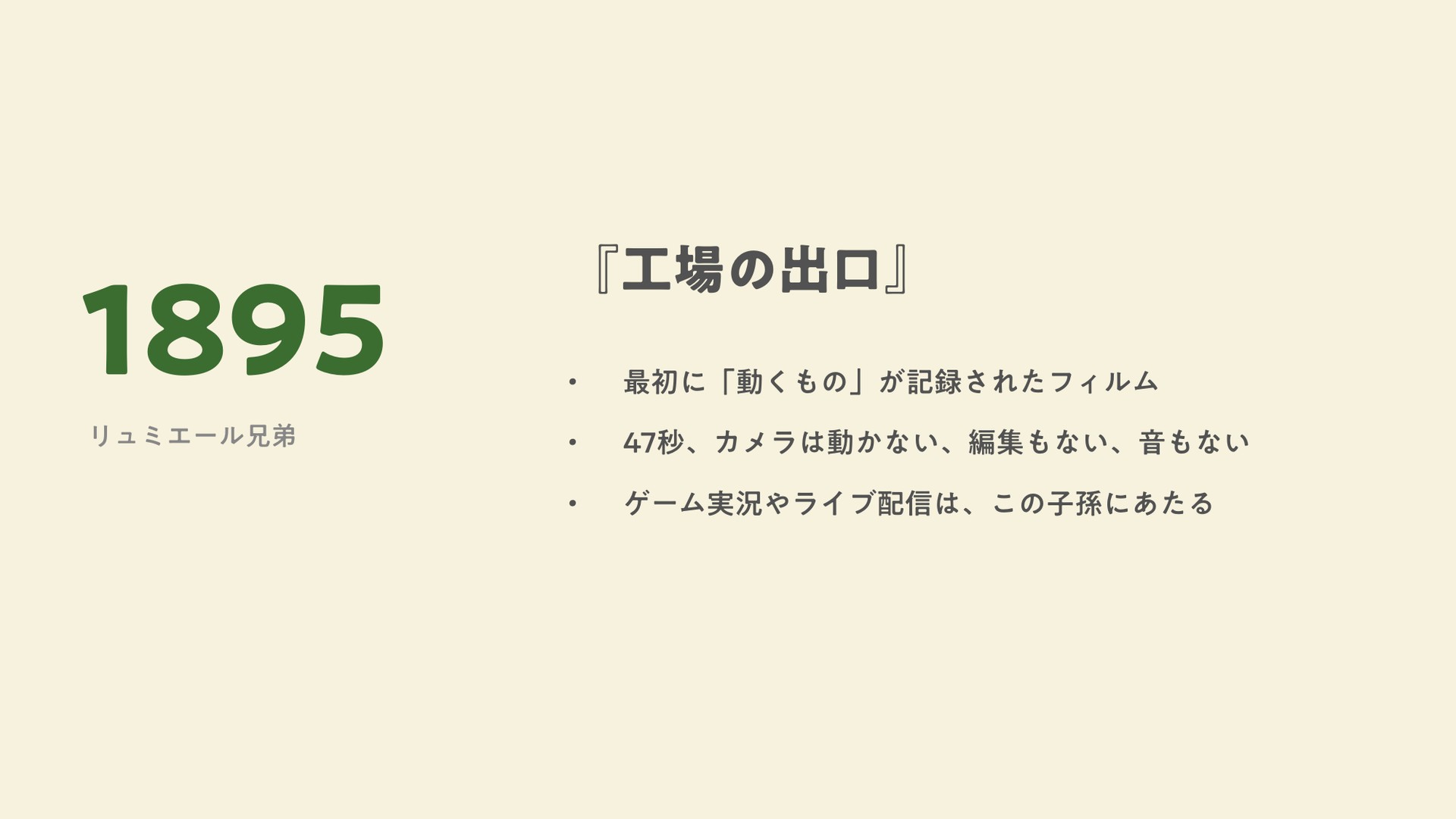
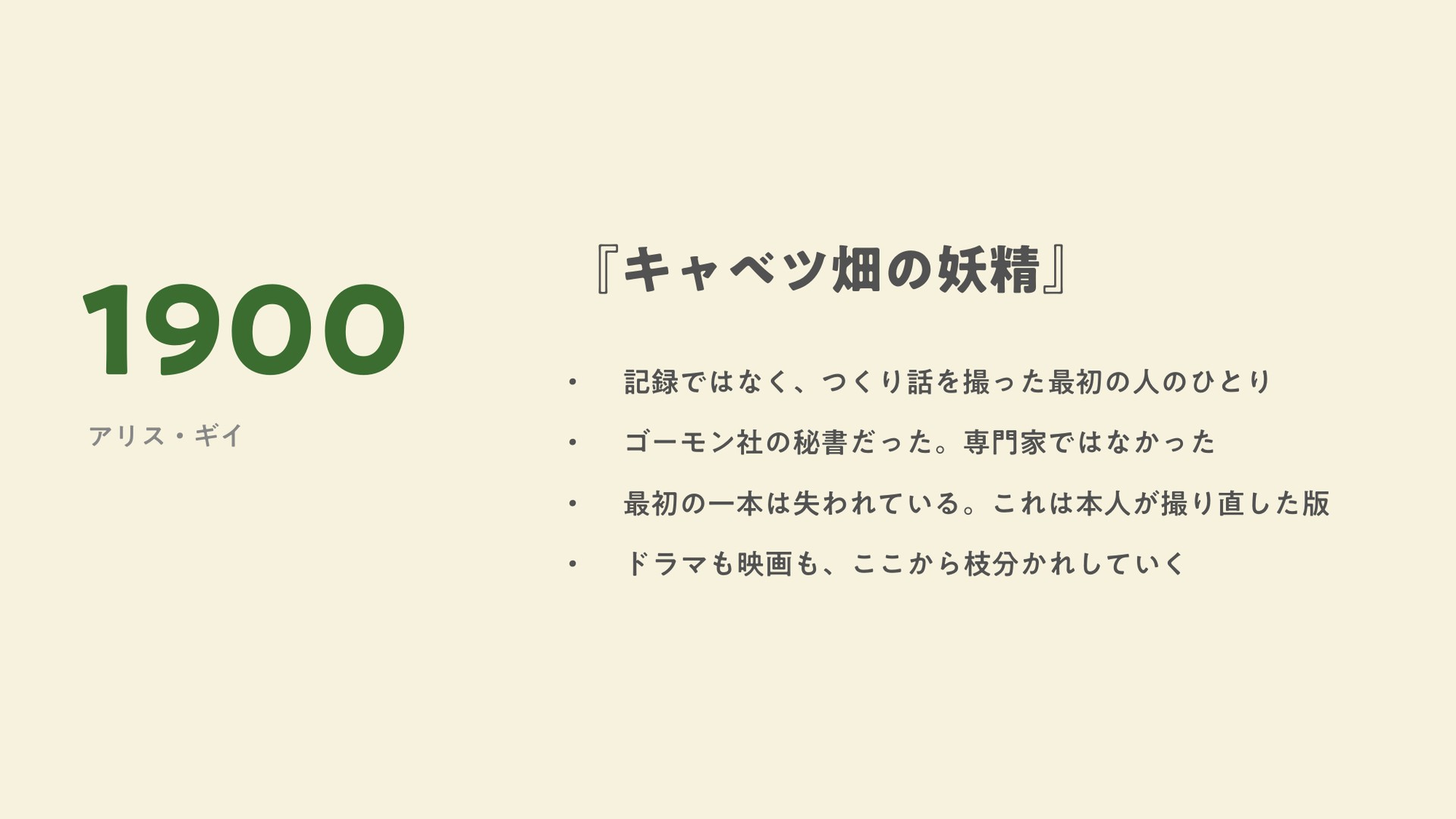
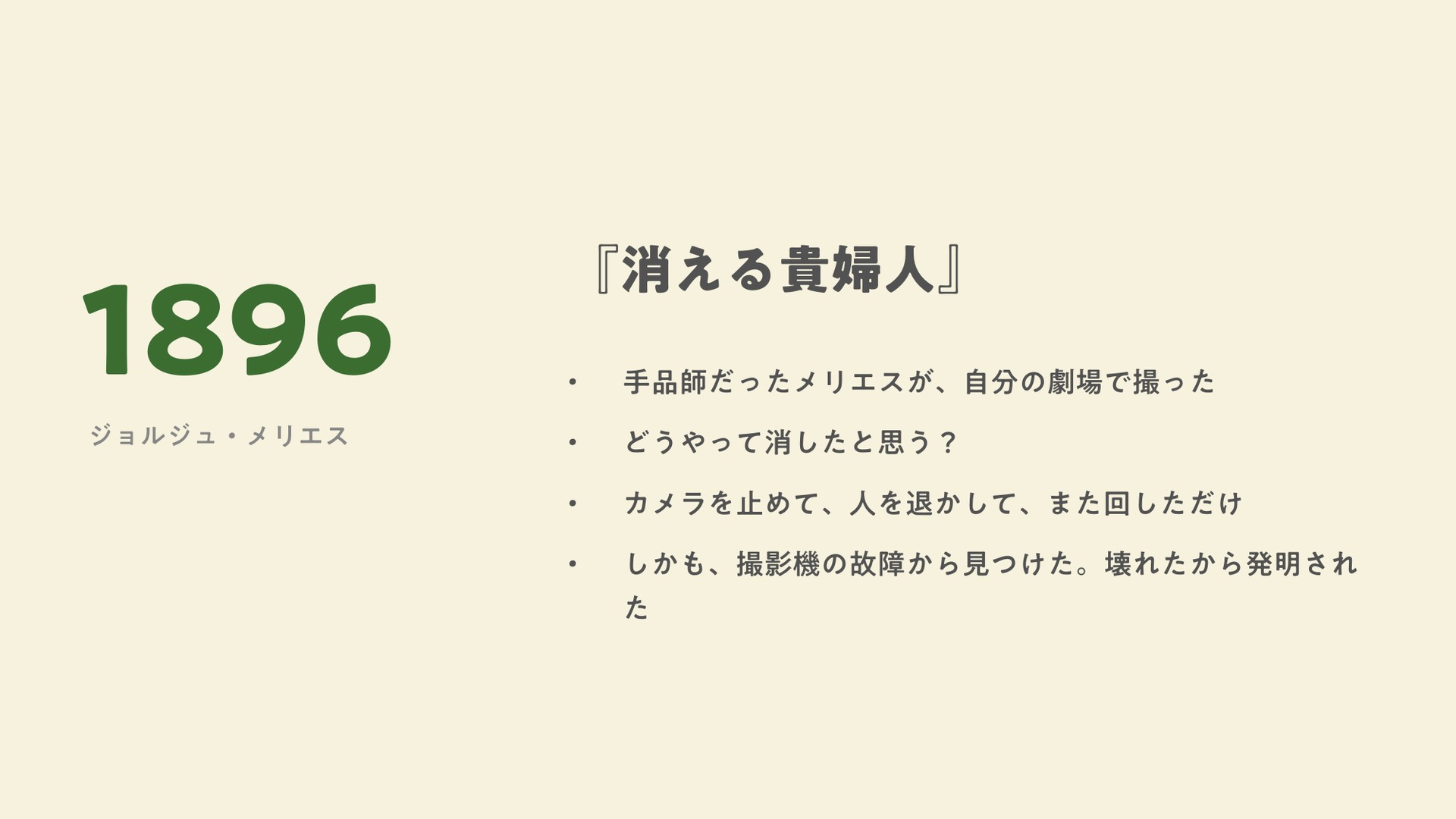
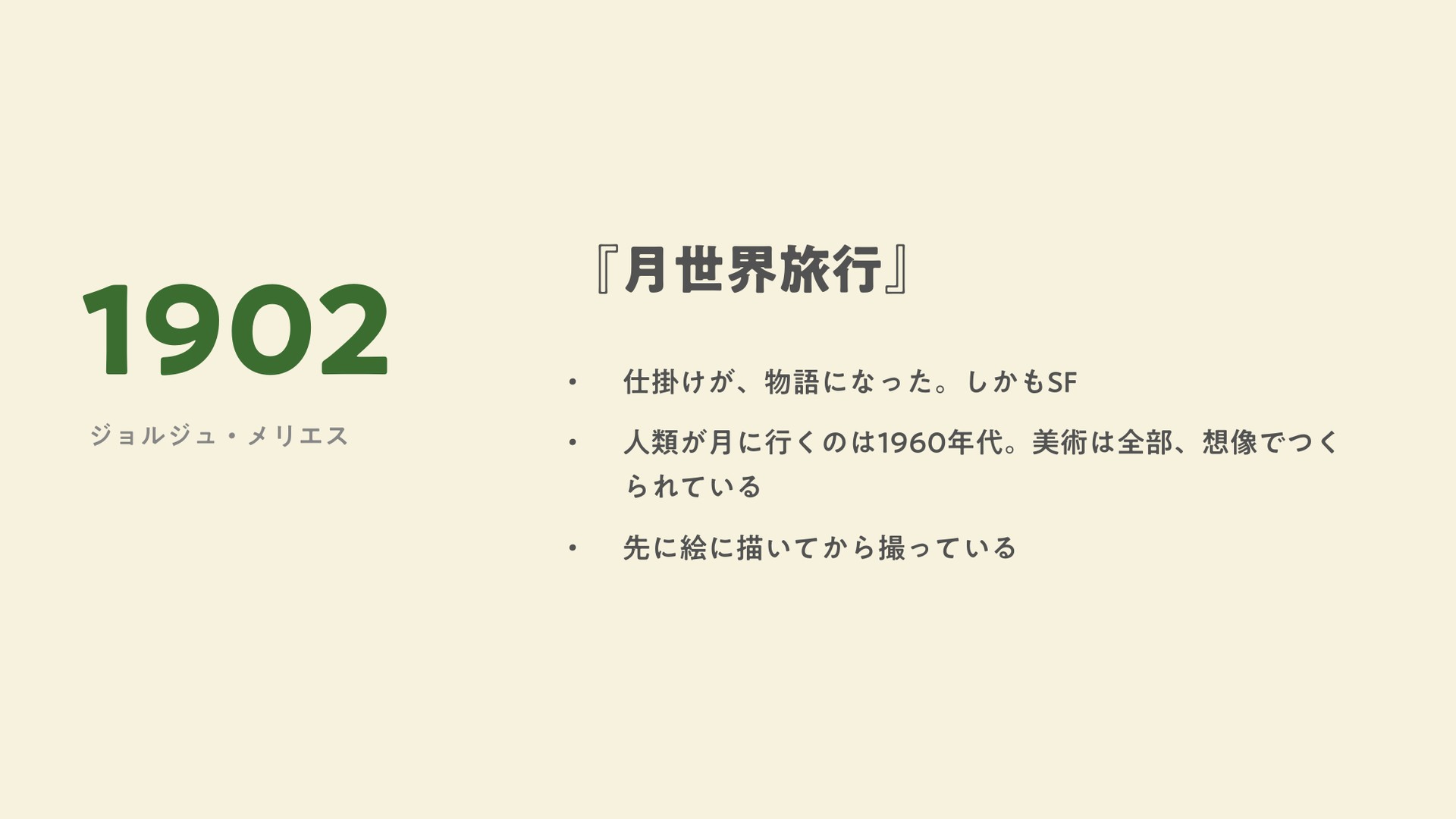
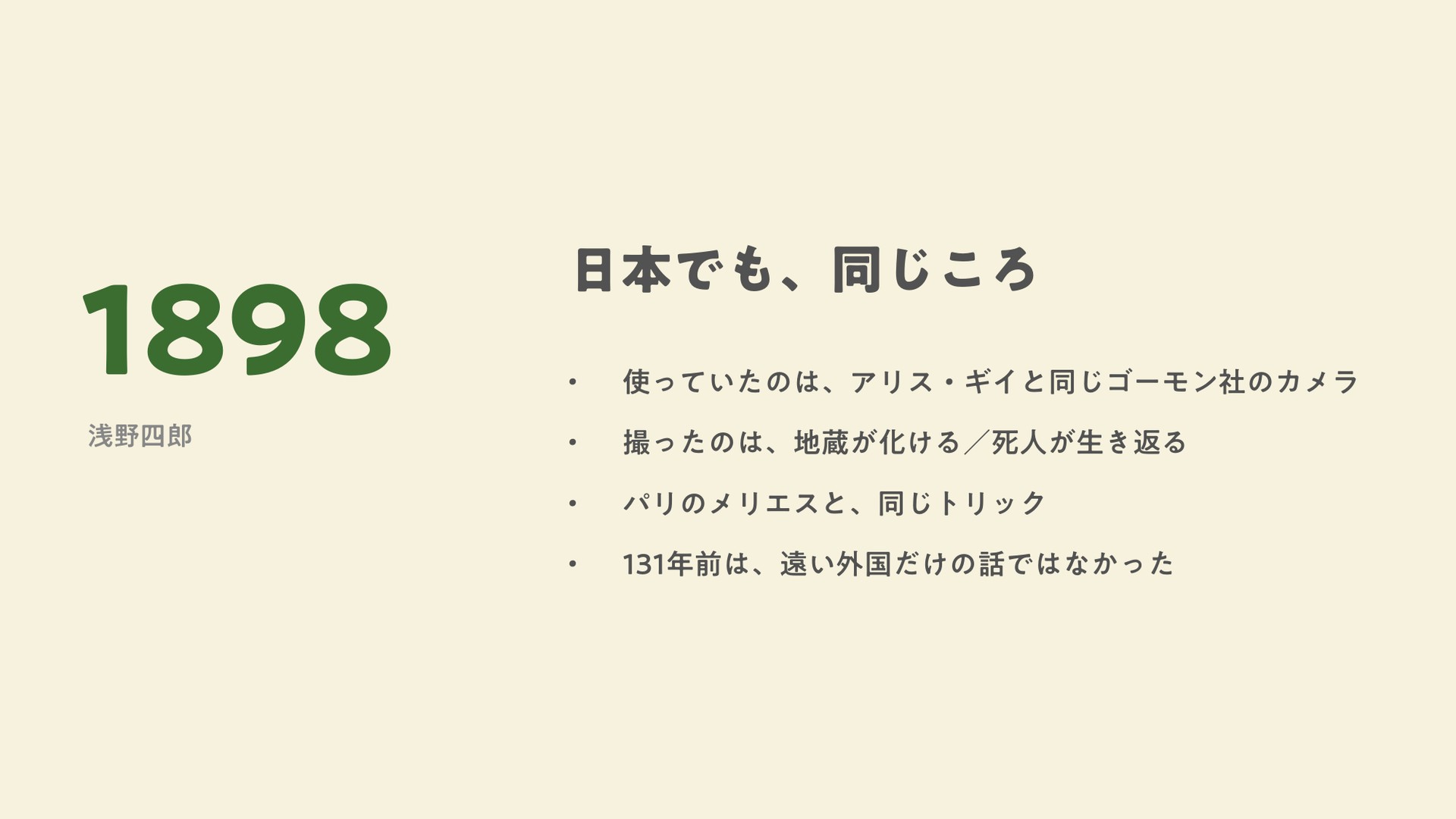
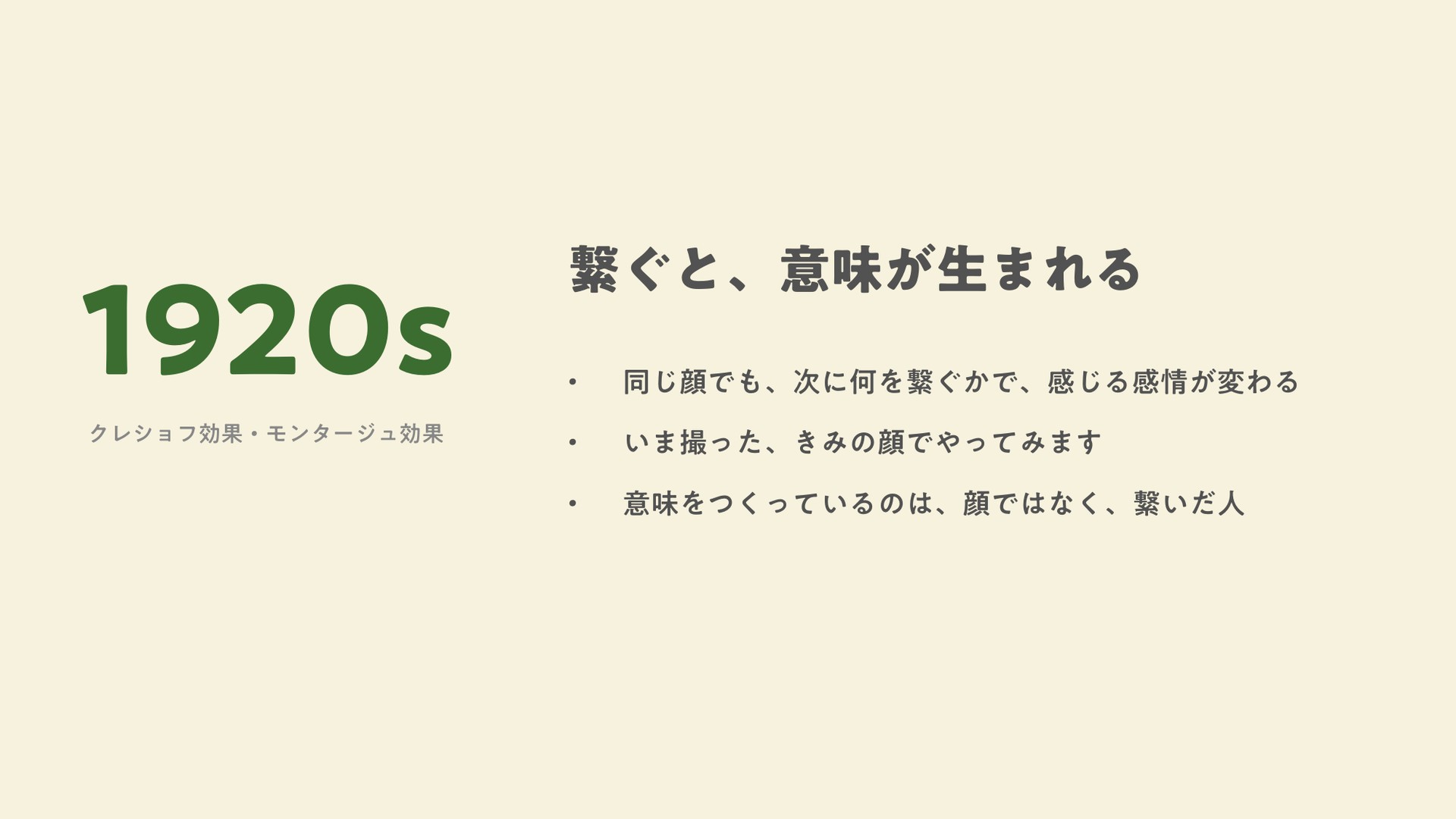
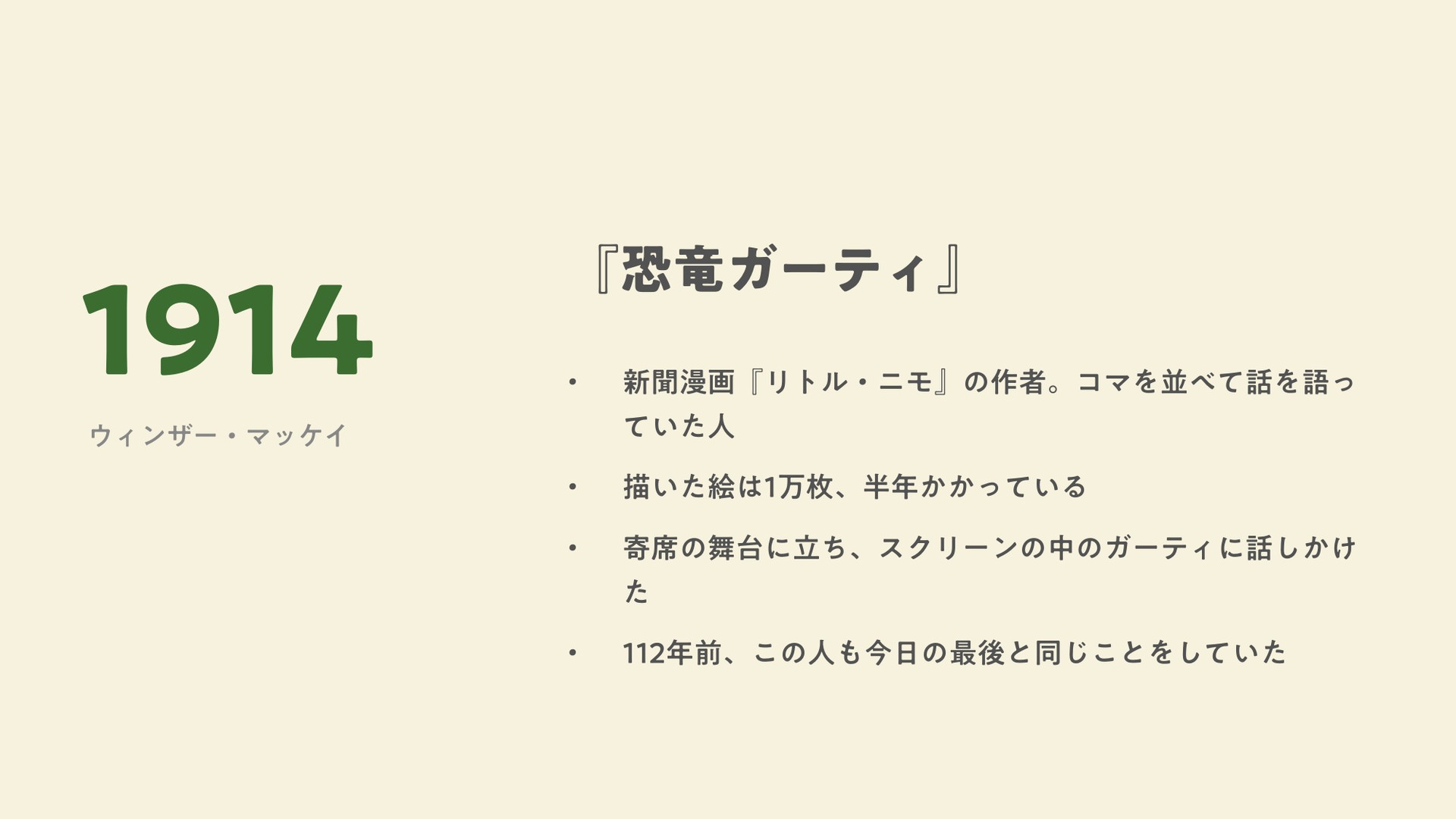
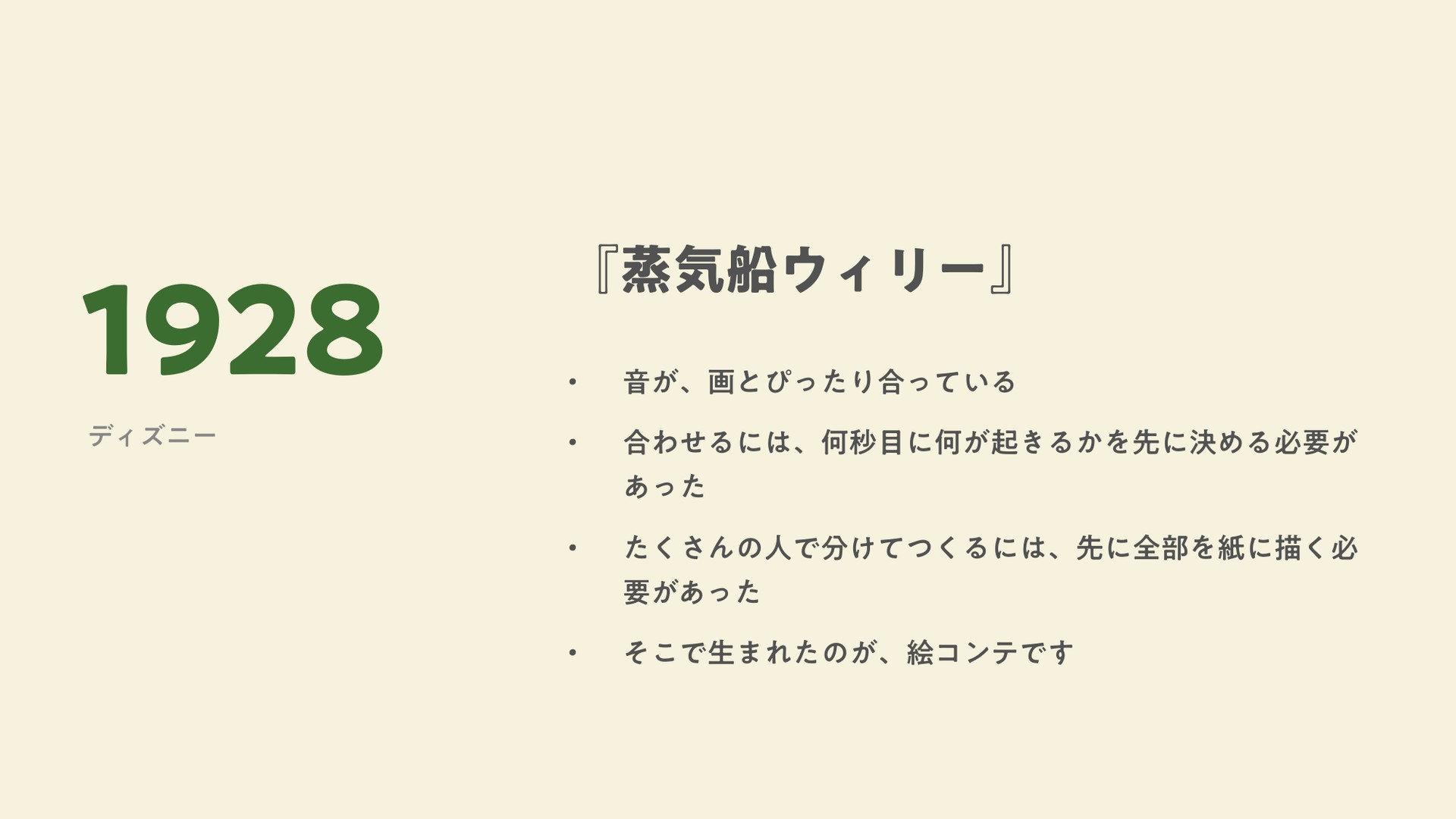
そこから、映像の歴史は発明の歴史として、131年前までさかのぼりました。映画のはじまりを代表する、1895年のリュミエール兄弟『工場の出口』。記録ではなく、つくり話を撮った最初の人のひとり、アリス・ギイ。撮影機の故障から「止めて、退かして、また回す」トリックを見つけた手品師メリエスと、その仕掛けが物語になった『月世界旅行』。同じころ日本でも、浅野四郎が同じトリックで撮っていたこと。次に何を繋ぐかで同じ顔の感情が変わるクレショフ効果。そして、新聞漫画のコマを動かしたマッケイの『恐竜ガーティ』と、音と画をぴったり合わせるために、先に全部を紙に描く必要があったディズニーの『蒸気船ウィリー』。そこで生まれたのが絵コンテです。
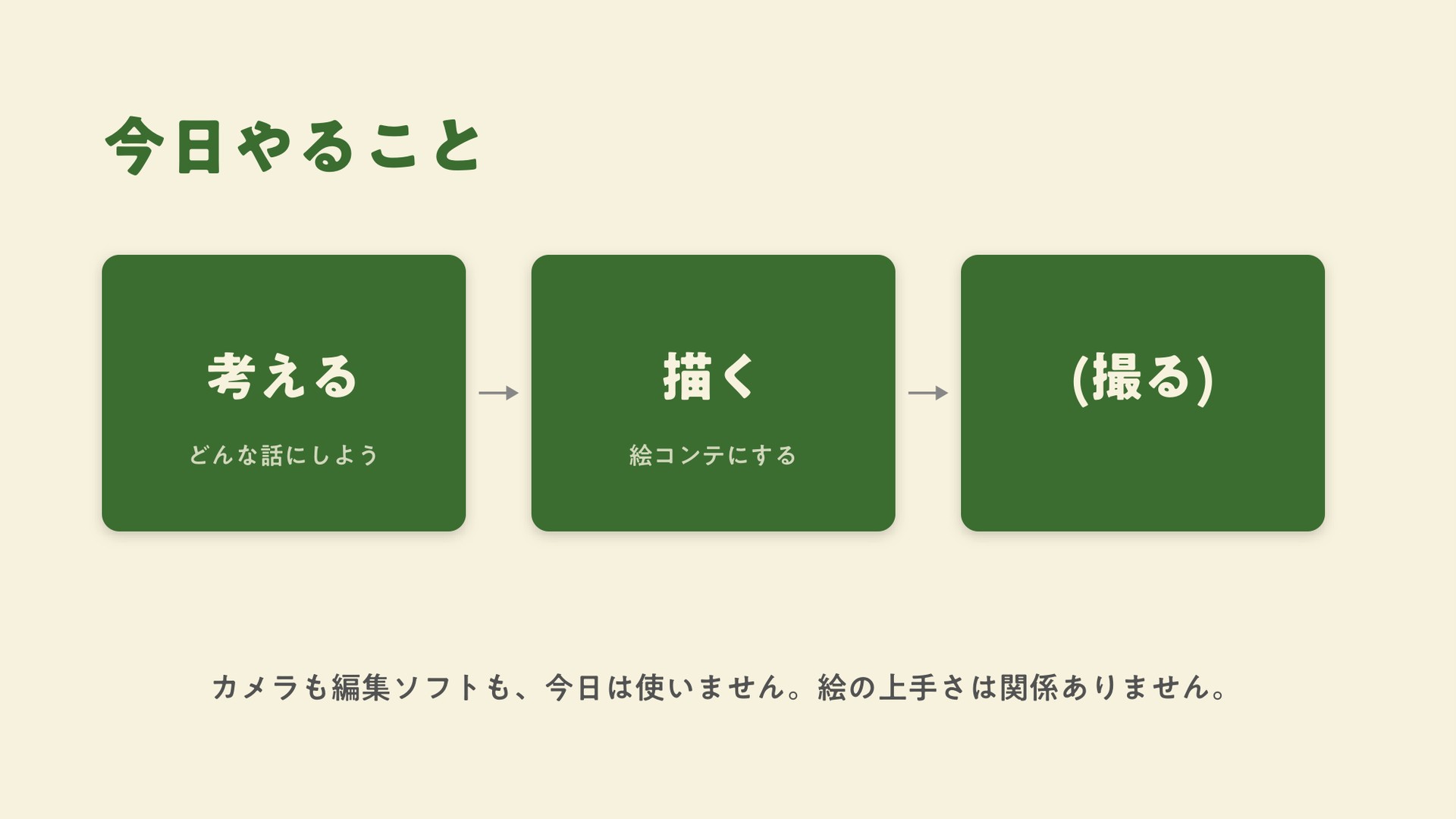
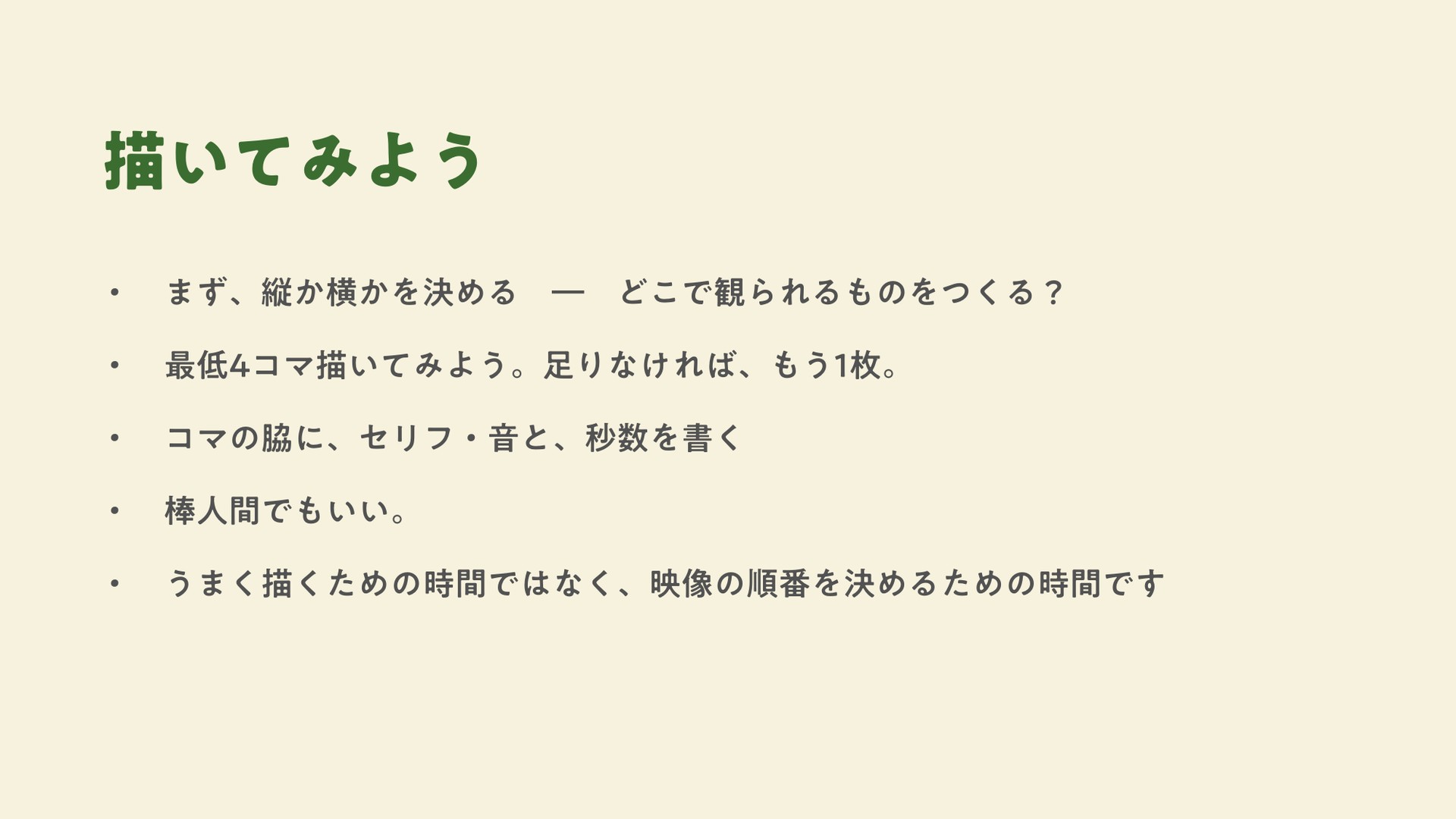
後半は、実際に描きました。絵コンテは、絵で書く文章です。だから絵の上手さは関係ありません。まず縦か横かを決め、どこで観られるものをつくるのかを考えます。最低4コマ、コマの脇にセリフや音と秒数を書き、棒人間でもかまいません。うまく描くための時間ではなく、映像の順番を決めるための時間です。カメラも編集ソフトも、この日は使っていません。
最後は、スクリーンの横に立って、自分の絵コンテと一緒に頭の中にある映像を発表しました。112年前、マッケイがスクリーンの中の恐竜に話しかけていたのと同じように。次の回はまだ決まっていませんが、この日描いた絵コンテをもとに、スマートフォンで実際に撮ってみるのもいいと考えています。
On August 20, 2026, at HITOTOKI MIKI, we started “Eizo no Kyoshitsu” (“Video Class”), a new series of SCIRE workshops. The theme of the first session was “Let’s Draw a Storyboard.” Aimed at junior high and high school students, it was a three-hour session that traced the history of film and then had each participant storyboard a video of their own.
The starting point was a question: “Where did the smartphone videos so popular today come from?” A survey beforehand asked what kinds of videos everyone usually watches and where, and we began the talk from the results. First we watched a short part of Tarkovsky’s “Solaris” and counted how many times the cut changed in 30 seconds, then did the same with a recent video. The point was not which is better, but to confirm that when the place of viewing differs, the right answer differs too.
From there, we went back 131 years, treating the history of film as a history of inventions. The Lumière brothers’ “Workers Leaving the Factory” (1895), one of the defining works of early cinema. Alice Guy, one of the first people to film a made-up story rather than a record. Méliès, the magician who discovered the “stop, move it, roll again” trick when his camera broke down, and “A Trip to the Moon,” where that trick became a story. Around the same time in Japan, Shiro Asano was filming with the same trick. The Kuleshov effect, in which the same face shows a different emotion depending on what is cut next to it. And McCay’s “Gertie the Dinosaur,” which set newspaper comic panels in motion, and Disney’s “Steamboat Willie,” which needed everything drawn on paper first in order to match sound and picture exactly. That is where the storyboard was born.
In the second half, we actually drew. A storyboard is writing done in pictures, so drawing skill does not matter. First decide vertical or horizontal, and think about where the video will be watched. At least four frames, with dialogue, sound, and seconds written beside each frame; stick figures are fine. It is time for deciding the order of the video, not for drawing well. No cameras or editing software were used that day.
At the end, each participant stood beside the screen and presented their storyboard along with the video in their head, just as McCay talked to the dinosaur on the screen 112 years ago. The next session has not been decided yet, but we are thinking it would be good to take the storyboards drawn that day and actually shoot them on smartphones.
- 構成を考える
- フライヤーとポスターをつくる
- 第1回を開く
- Planned the structure
- Made the flyer and poster
- Held the first session